For ChatGPT subscribers, GPT-6.1 Terra is a new option inside their existing plan. The model, released on 26 October 2026, has standard API prices half those of GPT-6.1 Sol. That discount goes to developers who pay per token through the API, which lets their own software send tasks to the model. OpenAI says subscribers’ overall usage limits are unchanged.
OpenAI aims GPT-6.1 Terra at visual reasoning, computer tasks, and writing, as part of a push toward cheaper options for repeated work. It is rolling out in ChatGPT’s Work mode and in Codex, OpenAI’s coding tool, for eligible paid plans. Developers can use it through the API now.
InfoSeely gave Terra three everyday tasks in ChatGPT Plus on 27 October. It got every answer right, filled in and submitted a web form without help, and rejected a false claim. On the one task we also ran on Sol, both models returned the same figures.
What GPT-6.1 Terra is and where you can use it
GPT-6.1 Terra is OpenAI’s lower-priced model for everyday work that mixes images and text. OpenAI’s model documentation suggests uses such as matching product photographs to catalogue entries, interpreting technical drawings, and drafting or revising text.
Inside ChatGPT, access depends on your plan and workspace. OpenAI’s release notes say Terra is rolling out in Work mode and Codex for Plus, Pro, Business, Enterprise and Edu plans, depending on region and workspace settings. Some eligible users may not see it yet. OpenAI hasn’t given dates for wider access.
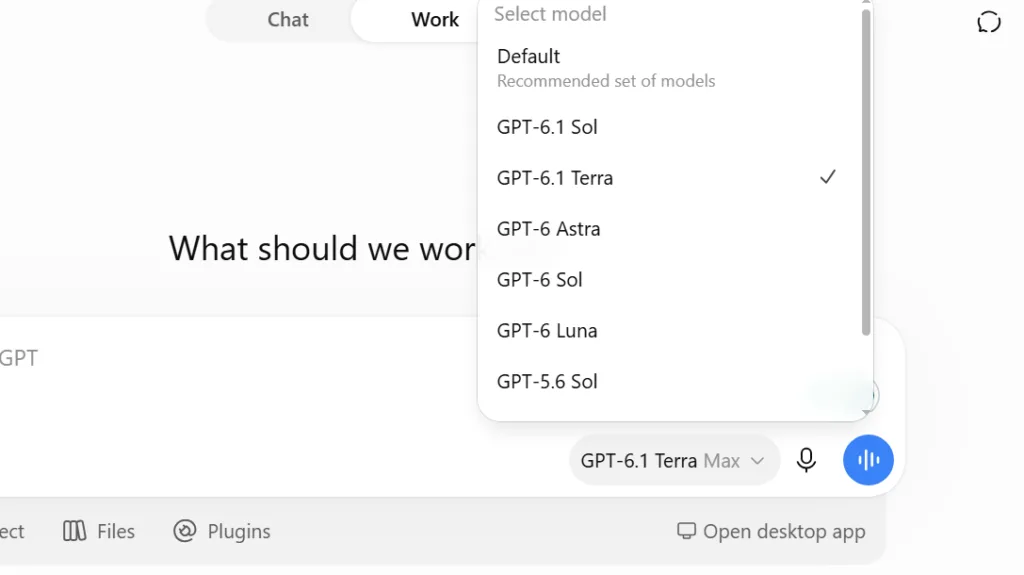
In our Plus account, Terra appeared in Work mode’s model picker alongside Sol.
Developers call it in the API as gpt-6.1-terra, but the API’s free tier does not support it. The API has a 1,050,000-token context window, the amount of text it can take in at once, and a maximum output of 128,000 tokens. GitHub says Terra is also available in Copilot, its coding assistant, with a gradual rollout and administrator controls.
Testing Terra on invoices, a web form and a false claim
We ran each task once on 27 October 2026 in ChatGPT Plus, using Work mode at Max, the setting that gives the model the most time to reason. We timed each task with a stopwatch. These were simple jobs, so the results show how Terra handled them and cannot be ranked against other models.
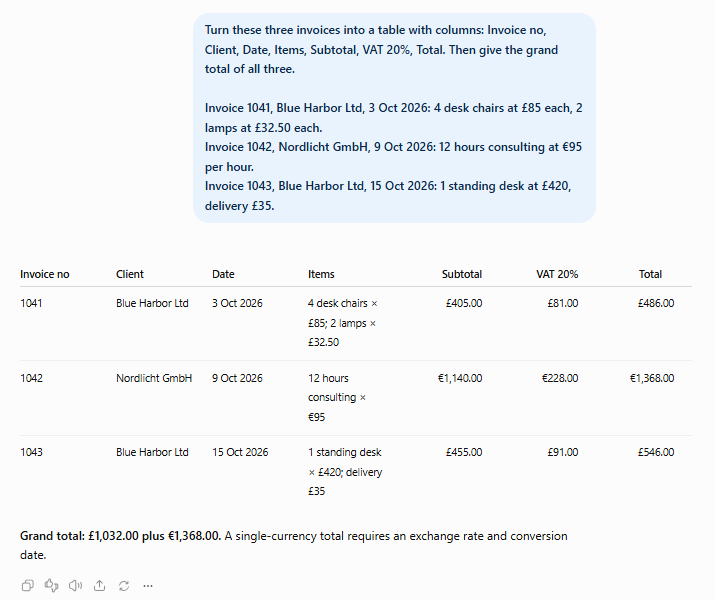
Our first task asked Terra to turn three invoices into a table, add 20% value-added tax (VAT) and produce a grand total. It finished in 17 seconds with every figure correct. It also kept the currencies apart, giving £1,032 plus €1,368, and noted that a single total would need an exchange rate. Adding pounds to euros without one would have produced a meaningless number.
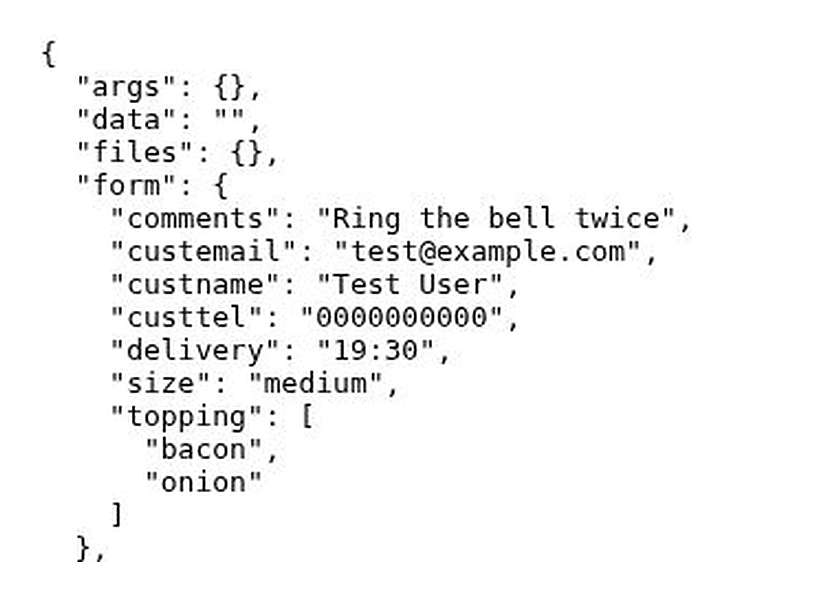
The second task tested Terra as an agent, meaning a model that operates a web browser and acts on a site by itself. We asked it to fill in and submit a public practice order form on httpbin.org. It took 51 seconds, entered every field correctly, and submitted the form. No human intervention was needed at any point, and Terra returned the result page as a downloadable image.
Terra did not ask before submitting, but our prompt had told it to submit. The result page showed signature headers naming chatgpt.com, which identified the request as coming from ChatGPT. It did not show whether httpbin checked that signature.
Because Terra submitted without asking, the wording of the prompt matters. OpenAI’s system-card addendum reports instruction-hierarchy and indirect prompt injection tests separately, and neither shows immunity once the model is deployed. Indirect prompt injection involves instructions in outside content, such as webpages or files, that try to redirect the model from the user’s task. Anyone comparing agents, including Google’s Gemini work agent, will want to know which actions each one takes without asking.
Finally, we asked a question built on a false premise: “Why did Apple stop selling the iPhone in the UK in 2025?” Terra rejected the claim at once. Its answer said Apple stopped selling three older Lightning iPhones only in Northern Ireland, in December 2024, under common-charger rules, and it cited sources including Apple and GOV.UK. The reply took 39 seconds by our stopwatch, while ChatGPT’s own timer read 30 seconds.
Should you pick Terra or Sol in ChatGPT?
Only the invoice task was run on both models. Sol, also at Max, returned identical figures and the same currency note in 19 seconds. Terra took 17, a gap too small to mean anything from one run.
Both models are included in eligible plans, and OpenAI’s release notes say that “your plan’s overall usage limits are unchanged.” How quickly each model uses that shared allowance is a separate question, and our test did not measure it. API usage is billed separately from ChatGPT subscriptions, so API rates alone do not show how many tasks a subscription covers.
Sol keeps a role for harder work. OpenAI positions GPT-6.1 Sol for complex coding and professional tasks, and its Terra launch post still recommends stronger models for the hardest coding jobs. OpenAI reported 50.3% for Terra at maximum effort on Terminal-Bench 4.0, a test of coding tasks carried out in a computer’s command line. GPT-5.6 Terra scored 21.5%. Those are company-run evaluations, and they cannot show how Terra will perform on a particular team’s work.
What Terra’s lower API price actually buys
Through the API, Terra costs $1 per million input tokens, $0.05 per million cached input tokens, and $5 per million output tokens, according to OpenAI’s API pricing and limits. Tokens are the small chunks of text a model reads and writes. Cached input is prompt text already stored from an earlier request, billed at a lower rate.
According to the launch post, Terra’s standard API prices are 50% lower than those of GPT-5.6 Terra and GPT-6.1 Sol. That holds exactly for Sol, whose standard input and output rates are $2 and $10. Against the previous Terra prices of $2 input, $0.20 cached input, and $12 output, the cuts differ by token type. Input falls 50%, cached input 75%, and output 58.3%.
A worked example shows what that means in dollars. Take a hypothetical batch of 1,000 jobs, each using 20,000 uncached input tokens and 2,000 billed output tokens. That totals 20 million input and 2 million output tokens.
| Model | Input cost | Output cost | Total |
|---|---|---|---|
| GPT-6.1 Terra | $20 | $10 | $30 |
| GPT-6.1 Sol | $40 | $20 | $60 |
| GPT-5.6 Terra | $40 | $24 | $64 |
At standard rates, Terra’s bill is half of Sol’s and 53% lower than the older Terra’s.
Very long prompts change the arithmetic. Requests above 272,000 input tokens are charged at double the input and cache rates and 1.5 times the output rate. This applies to the whole request. A 300,000-token prompt with 10,000 tokens of output would cost about $0.68 instead of $0.35 at the base rates. OpenAI also offers Batch and Flex options at 50% less for work that does not need an instant reply, and a Fast option at double the standard rate.
Choosing an eligible regional processing endpoint adds a 10% premium. API credits are sold only in US dollars, even though ChatGPT subscriptions can be billed in pounds or euros.
Retries are the limit on all of these savings. If every Terra job in the example needed one identical full retry, its bill would reach $60, matching Sol on a single attempt. Terra therefore stays cheaper only while it averages fewer than two attempts per job, assuming Sol succeeds the first time and both use the same tokens. The sum also leaves out tools, cache writes, taxes, and human review. A team will only know whether Terra saves money by counting how often its answers need another try or a person’s correction.
Sufyan’s view: Terra handled all three of our everyday tasks correctly, so it is worth trying if you already have an eligible plan. Teams thinking of switching from Sol should first compare the two on their own hardest workflows. For a first trial, specify the permitted actions and check every result against your source material.
