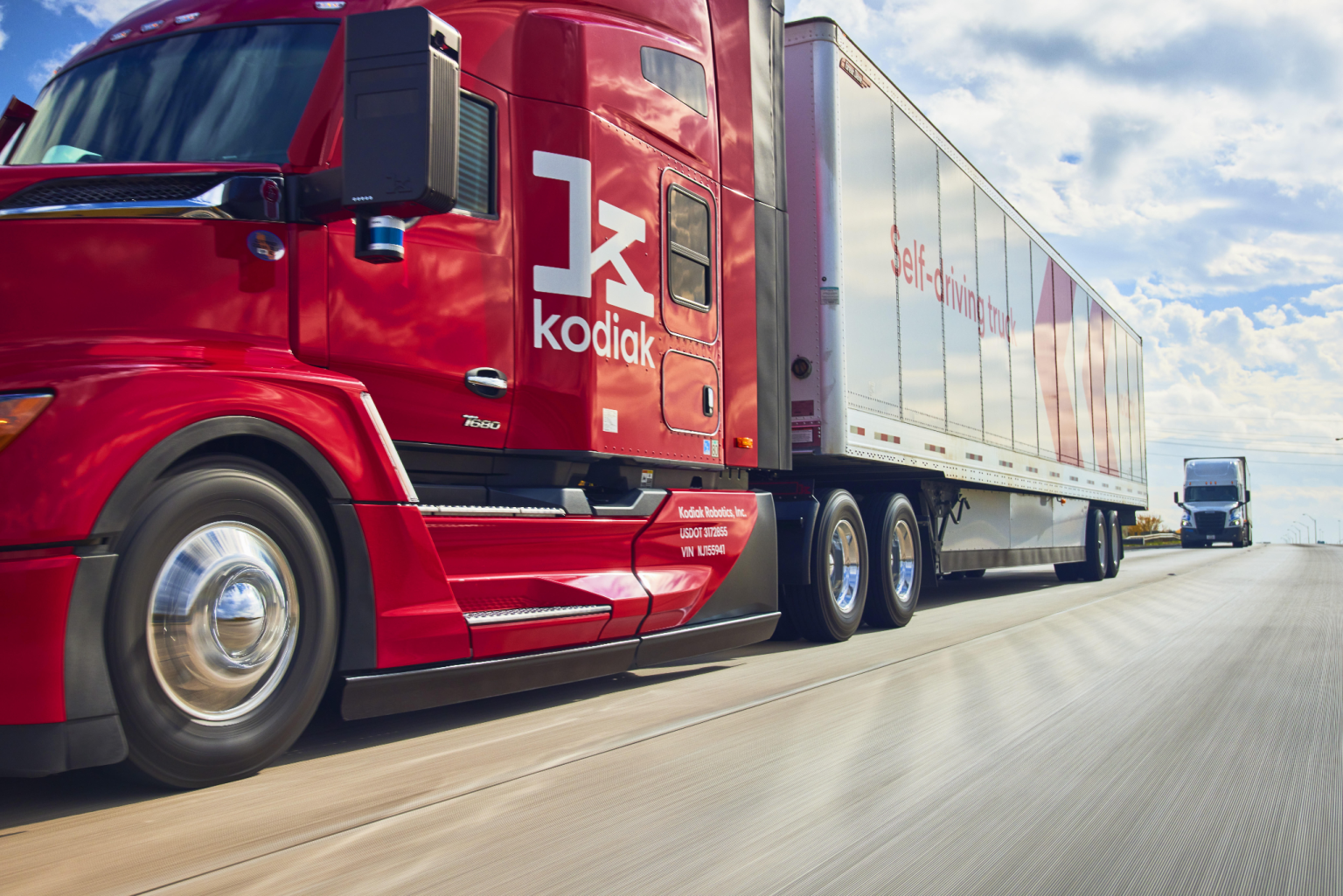
The autonomous buses SPAC trend is gaining traction as the autonomous vehicle industry evolves rapidly. In this landscape, Kodiak Robotics’ decision to go public through a SPAC merger represents a significant milestone. The self-driving trucking sector has faced multiple challenges in recent years, yet Kodiak’s move signals renewed confidence and growth potential in the market.
Kodiak Robotics, a self-driving truck startup, plans to go public through a merger with Ares Acquisition Corporation II. The deal values the company at $2.5 billion pre-money, underscoring investor confidence in its technology and model.
Kodiak has raised about $243 million, with major institutional investors like Soros Fund Management, ARK Investments, and Ares backing the deal. Over $110 million in new and existing funding and $551 million held in trust give Kodiak a solid financial base.
Why the SPAC Route Matters
A SPAC (Special Purpose Acquisition Company) lets private companies go public without a traditional IPO. SPACs were very popular in 2021, but recently lost appeal, especially in capital-intensive sectors like autonomous vehicles.
Despite this, Kodiak’s SPAC move is strategic. Autonomous trucking needs significant capital for R&D and deployment. Going public lets Kodiak accelerate growth and expand its market reach.
This is notable, as competitors such as Embark and TuSimple have closed. Kodiak’s progress suggests a more sustainable and focused strategy.
Real-World Performance and Revenue
Unlike many in the autonomous vehicle space, Kodiak already generates revenue. While limited, this shows the technology is commercially viable.
Kodiak reports its autonomous trucks have driven over 2.6 million miles. This robust real-world testing bolsters its credibility and distinguishes it from competitors still in early development.
In January, Kodiak delivered its first two autonomous trucks to Atlas Energy Solutions, marking its first commercial deployment. Atlas has placed an early order for 100 trucks, giving Kodiak a promising path to build steady revenue moving forward.
Strategic Approach: Short-Term vs Long-Term
Kodiak aims to commercialize fully autonomous long-haul trucking; in the short term, it is focusing on off-road autonomy.
This allows Kodiak to operate in controlled settings, such as oil fields and remote sites, where regulations are lighter. The company deploys technology faster and generates early revenue while refining its systems.
This balanced approach reduces risk and preserves long-term growth potential.
Competitive Landscape and Market Challenges
The autonomous trucking market is competitive. Aurora Innovation is preparing to launch driverless trucking, adding pressure on Kodiak to scale.
Additionally, broader economic factors, such as tariffs and global trade tensions, can affect investor sentiment and market stability. These challenges make Kodiak’s public debut both an opportunity and a risk.
Automation in logistics continues to drive demand. The autonomous buses Spac and trucking sectors should benefit from greater efficiency and lower costs.
Leadership and Industry Experience
Kodiak Robotics is led by CEO Don Burnette, who has extensive experience in autonomous driving. He previously worked on Google’s self-driving project before co-founding Otto, which was later acquired by Uber.
Burnette sees trucking as the most practical and scalable use of autonomy. This fits industry trends, given freight’s repetitive, long-haul nature.
Future Outlook
Kodiak’s public entry should speed up expansion. Public funds can strengthen partnerships, operations, and technology.
Profitability will require time. Autonomous systems need large investments in hardware, software, and infrastructure. Still, the long-term outlook is positive.
Industry experts believe that autonomous trucking could transform logistics over the next decade by improving efficiency, reducing costs, and addressing driver shortages.
Conclusion
Kodiak Robotics’ SPAC merger represents a bold step forward in the autonomous trucking industry. With real-world deployments, expanding partnerships, and strong financial backing, the company is well-positioned for future growth as it seeks to capitalize on emerging opportunities in autonomous logistics. While challenges remain, Kodiak’s strategy and experience offer a competitive edge. If successful, this could spur innovation in related sectors, including autonomous buses SPAC developments.s.
FAQs
Q1: What does Kodiak Robotics do?
Kodiak Robotics develops autonomous trucking technology for freight transportation.
Q2: What is a SPAC?
A SPAC is a company created to take private companies public through a merger rather than a traditional IPO.
Q3: Who are Kodiak’s competitors?
Major competitors include Aurora Innovation and, previously, TuSimple and Embark.
Q4: How does Kodiak make money?
Kodiak generates revenue through commercial partnerships and autonomous trucking services.
Q5: What is the future of autonomous trucking?
Autonomous trucking is expected to improve logistics efficiency and reduce costs over the next decade.
